
A Design System That Compiles
Several products displayed similar data but had separate implementations of their user interfaces. This toolkit provides shared components and conventions, with static checks and documentation to guide both engineers and coding agents using it.
Some code using the toolkit is written with coding agents. Documented rules and automated checks make it easier for both engineers and agents to use the components consistently.
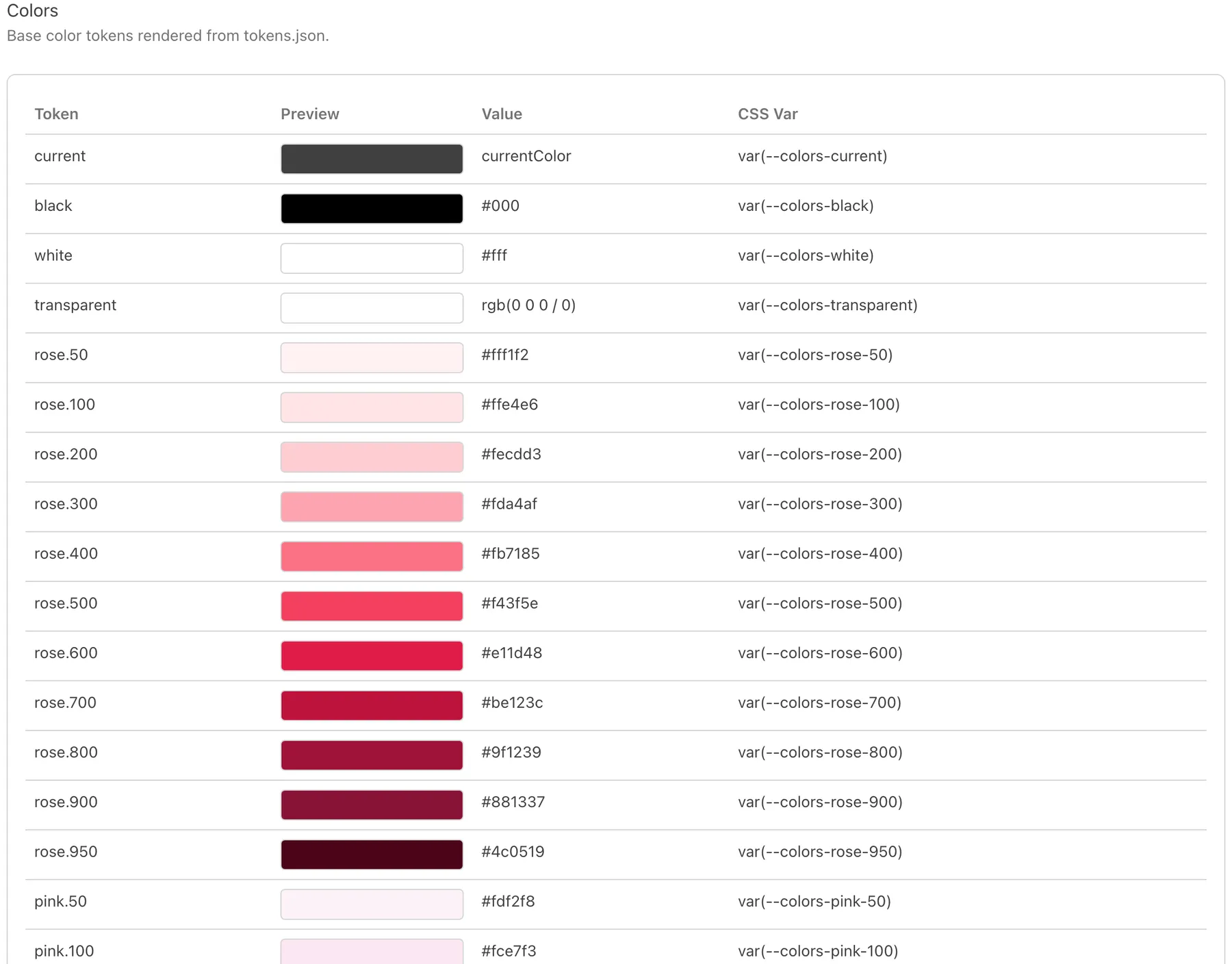
Semantic tokens
Components use semantic tokens rather than base colours directly. These include a three-step surface ramp, separate light and dark shadows, and role-based palettes (solid, subtle, surface, outline and plain).
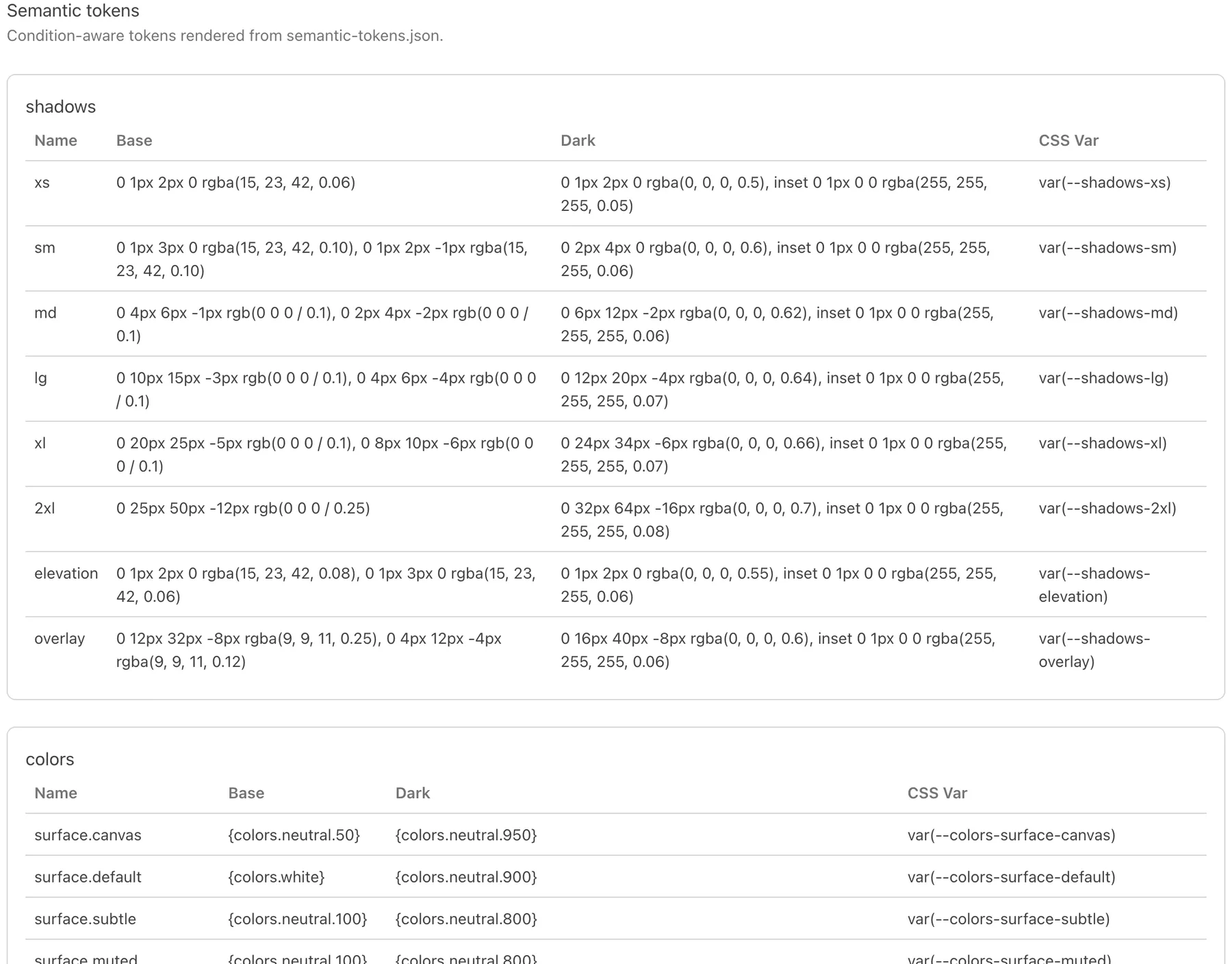
Named tokens give components specific values to use. A linter can check references such as surface.subtle, while visual descriptions such as “a slightly lighter grey” cannot be enforced consistently.
Contrast pairs are checked against AA in the preview for both themes. The accent colour was adjusted after its contrast check failed.
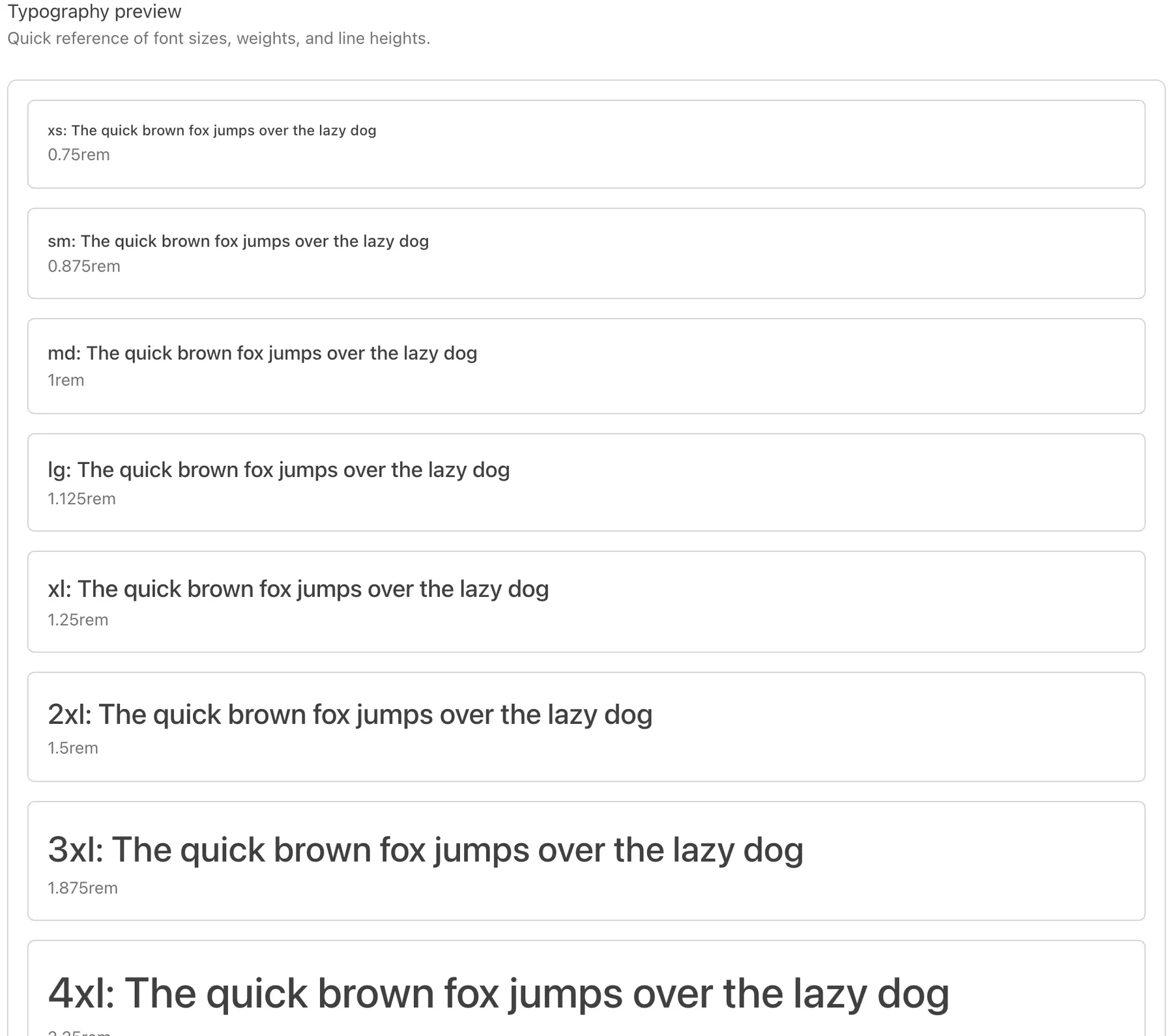
Chart colours
Charts need categorical series colours, and products may need to customize that palette.
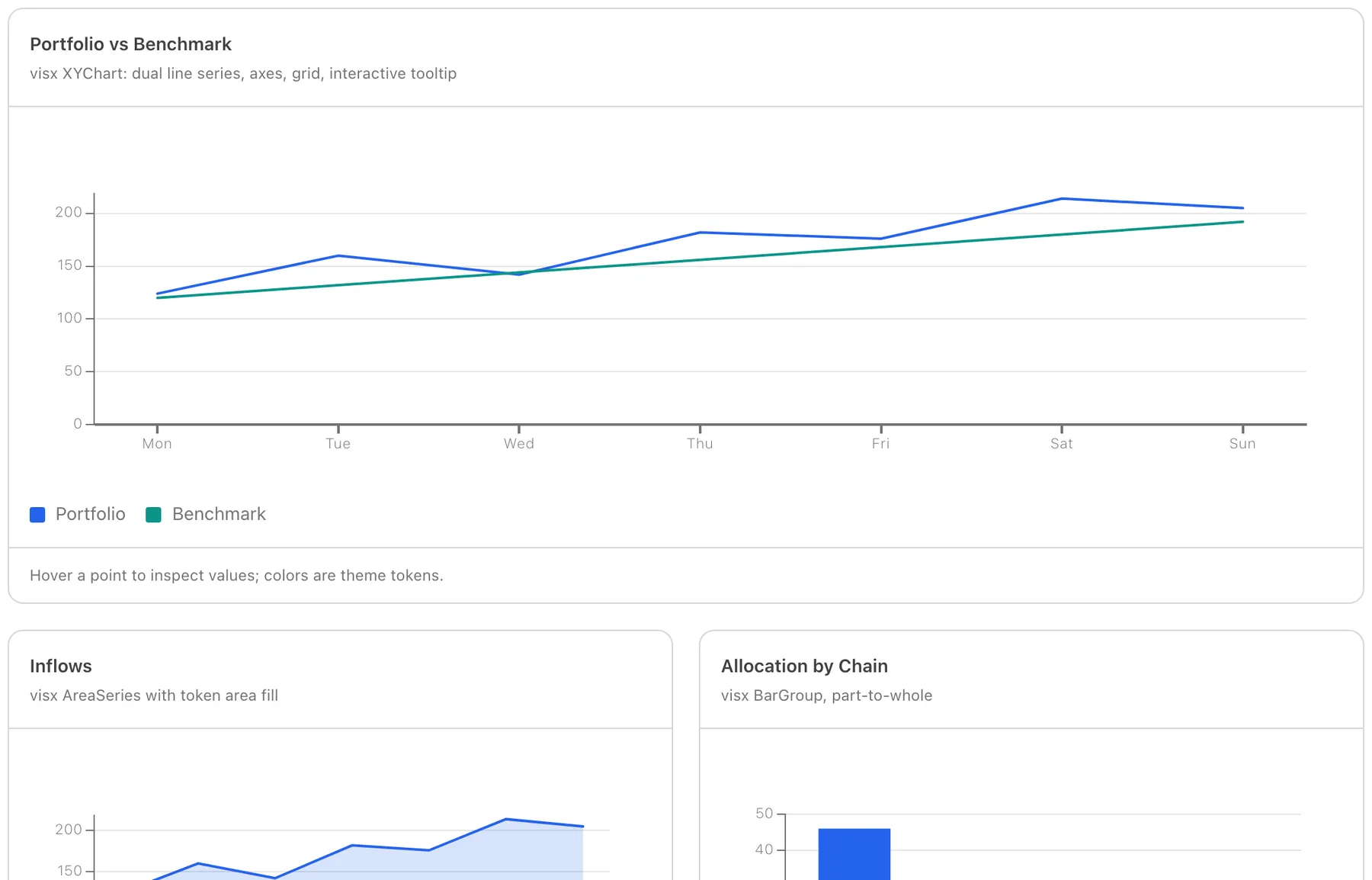
Charts use a dedicated chart.* token family for series colours. The chart inherits the active light or dark theme without selecting it directly. Token names are a union type checked at compile time, with a development guard for unknown names. This guard followed a case where an invalid token name caused a palette swatch to render transparent.
Compiling the styles
Panda CSS extracts styles from source at build time. The browser does not need a style engine, and server rendering can use the generated static stylesheet. The tradeoff is that styles must be known at build time.
Panda reads source at build time to find recipe variants. If a variant value is only known at runtime, Panda cannot generate its rule; the class may be present without corresponding CSS.
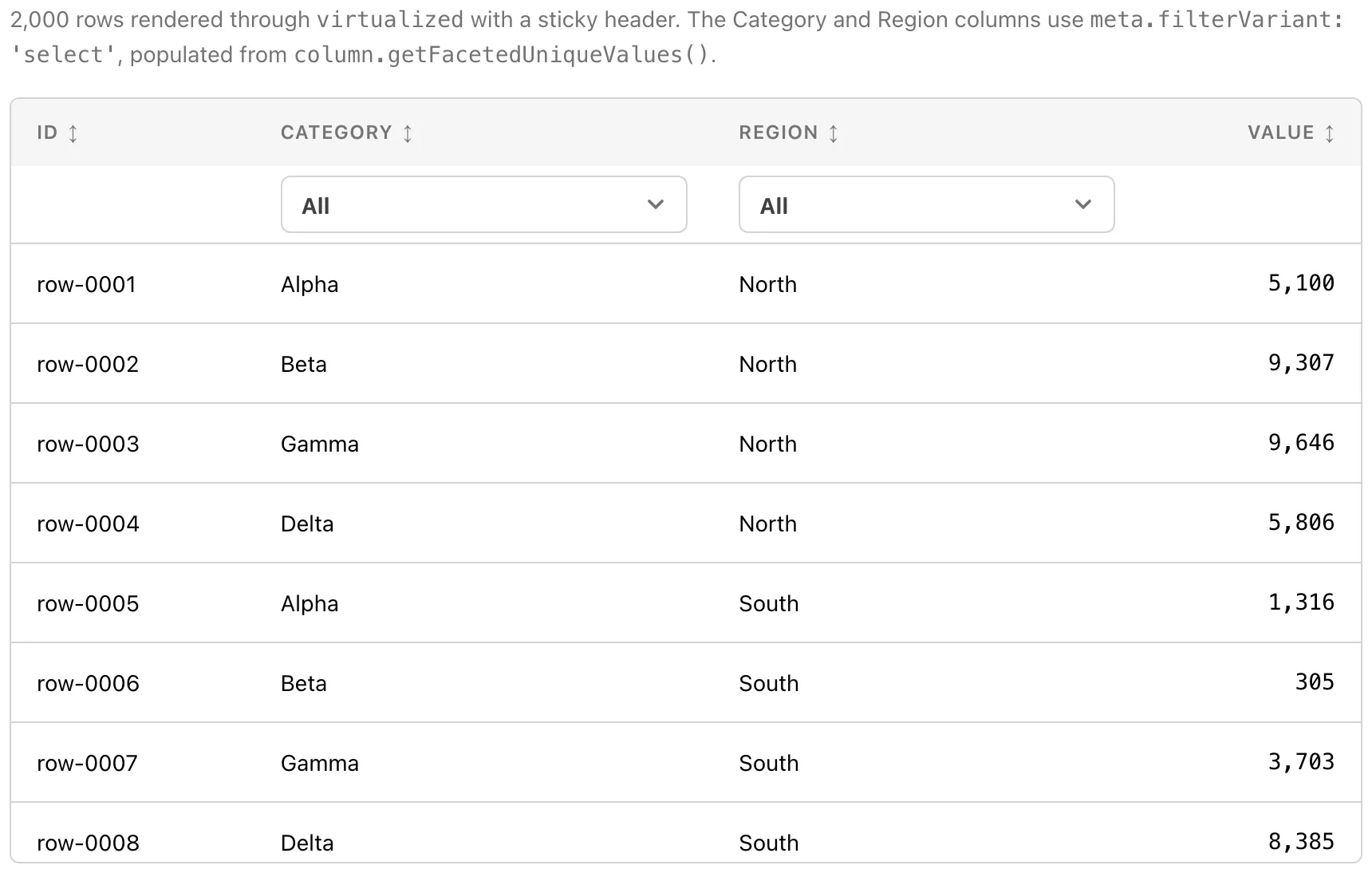
Panda’s staticCss option emits every variant of a recipe. It is a root configuration key and is ignored inside presets, so the library cannot set it for consumers. The package exports the recipe list for consumers to include in their root configuration; it uses the same map internally.
A doctor command checks consumer configuration for missing Panda recipes and undefined palette roles. An audit also found two lint rules that were configured so they could not fail; those rules were corrected.
These tools document and validate the build-time requirements, including which recipes consumers need to configure and which tokens are valid.
Documentation and agent support
Installable guidance documents the toolkit’s tokens, recipes, charting package, Ark UI composition, state attributes, layout and typography.
There are agents as well as skills, each scoped narrowly enough to be useful: one for implementation, one for Playwright-backed visual verification, one for auditing token discipline without a browser, one for checking that the happy path still works, one for performance. Two more skills exist purely for the iteration loop: one that captures screenshots and runs a structured feedback conversation when someone says the UI looks wrong, and one for selecting and annotating elements in a live app to compare variants in place.
A documentation generator produces product, design and preview references from the token data and recipe definitions.
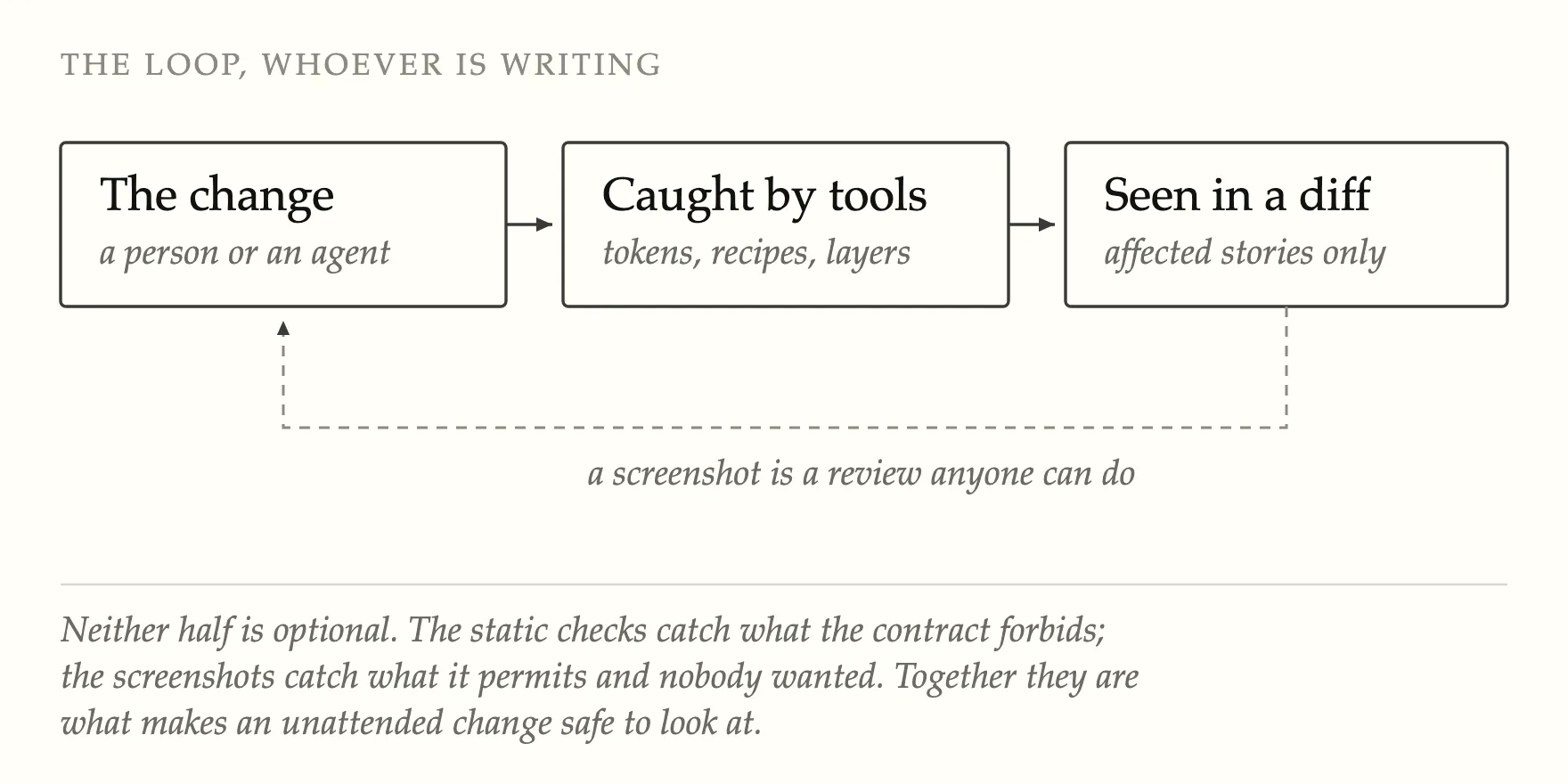
Visual tests capture every component story and compare it with a baseline using a small pixel tolerance. The module graph identifies which stories a change affects, limiting baseline updates to those stories. Additional checks detect snapshots for removed stories and prevent tests from running against a stale build.
Static checks validate token and recipe rules; screenshot comparisons identify visual changes that require review.
Interaction with application styles
Panda emits styles into cascade layers: reset, base, tokens, recipes and utilities. Unlayered CSS takes precedence over layered styles regardless of specificity. For example, an unlayered button { font: inherit } rule overrides the font specified by the design system. Applications should place their base styles in a layer as well.
What it costs to ship
The library still ships JavaScript, despite having no runtime style engine. A separate bundle analysis found a charting dependency barrel that added 82.6 kB minified. The package was split into core, primitives and chart tiers, with sideEffects: false to support tree-shaking.